

Nvidia and CrowdStrike launch SafeMind: when AI learns to fight cyberattacks
Listen to this article
Read aloud by your browser. No audio file is downloaded.
Spoken by your browser. This is not a recorded audio file. The time shown is an estimate.
If you are deciding now, keep SafeMind in view before the price or the spec sheet.
For a long time, companies built their defense around a fairly simple idea:
spot an intrusion, understand what happened, then try to stop the attacker before they go any further.
The problem is that the digital world no longer moves at that speed.
Attackers use automation. Campaigns can be prepared faster.
Vulnerabilities are studied at scale. And above all, artificial intelligence is starting to change
the balance between the time it takes to attack and the time it takes to defend.

🛡️
An agentic system built specifically for cybersecurity.
🔴
An offensive model whose job is to reproduce attack scenarios.
🔵
A defensive model meant to find weaknesses and strengthen protections.
🤖
An approach that tries to move from analysis to controlled action.
A new battle is starting in cybersecurity
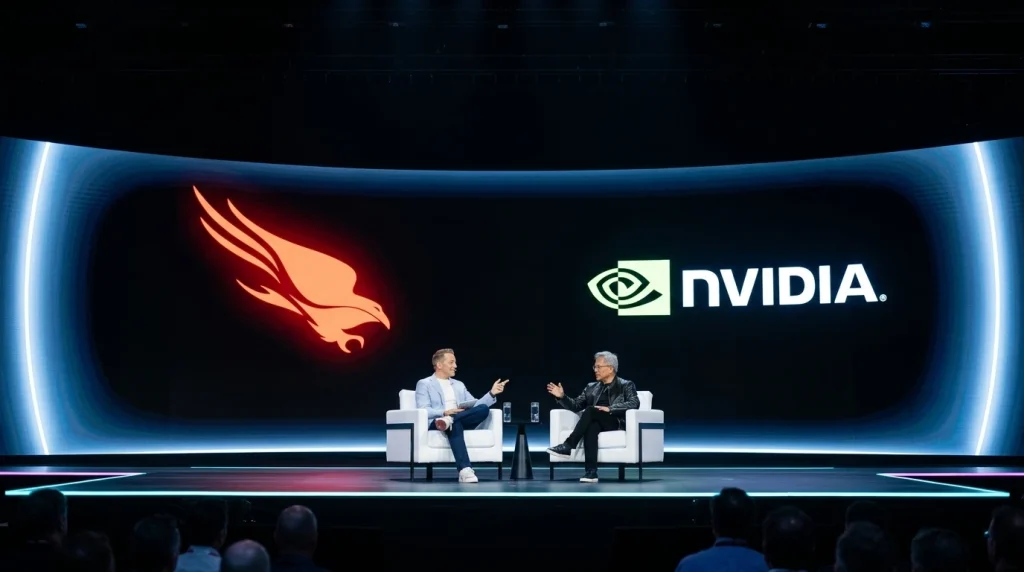
This is exactly the ground on which Nvidia and CrowdStrike have just launched SafeMind.
Presented on 1 September 2026, at Fal.Con 2026, SafeMind is not simply
a new chatbot bolted onto a security platform.
CrowdStrike presents it as an agentic system designed specifically for cybersecurity, with two specialized models:
Red Tempest, tasked with reproducing an adversary’s behavior, and
Blue Solano, tasked with building and applying the defense.
And that is where the subject gets especially interesting.
Because the idea is no longer only:
“Can an AI detect a cyberattack?”
The question becomes:
“What happens when two AIs can keep facing each other to improve a system’s security?”
Our answer, before the details
SafeMind is an important step for AI-assisted cybersecurity,
but it should not yet be presented as an autonomous defense that can make a company invulnerable.
Its real value lies elsewhere.
CrowdStrike wants to create a loop in which an AI specialized in offense looks for weaknesses,
another specialized in defense tries to fix them, and then the system starts again.
In theory, each cycle should strengthen protection.
So this is less an “antivirus with AI” than an attempt to build
a cybersecurity system able to keep learning from the clash between attack and defense.
And that distinction is fundamental.
What exactly is SafeMind?
CrowdStrike describes SafeMind as a family of specialized models and orchestration systems
built to run inside its Falcon security environment.
The system relies in particular on two models:
| Model | Role | Main function |
|---|---|---|
| Red Tempest | Offensive | Reproduce attack scenarios and look for intrusion paths |
| Blue Solano | Defensive | Identify weaknesses and build protections |
| Agent harnesses | Orchestration | Provide context, tools, memory, permissions, validation, and control |
| Falcon | Platform | Provide telemetry and the operational environment |
CrowdStrike says the models are built on the open models
NVIDIA Nemotron, then post-trained on its own cybersecurity data.
That includes Falcon telemetry, threat intelligence, annotations from
Falcon Complete MDR, and the experience gathered across many incident responses.
This is probably one of the most important parts of the announcement.
The model is not supposed to learn cybersecurity only from generic data available on the internet.
It is specialized with data that comes directly from a live security environment.
Red Tempest versus Blue Solano: a new version of “Red Team vs Blue Team”
In traditional cybersecurity, the teams Red Team and
Blue Team have different missions.
The Red Team tries to test the defenses.
The Blue Team protects the environment, detects anomalies, and responds to incidents.
SafeMind carries that logic into an agentic environment.

Red Tempest
Red Tempest plays the adversary.
Its goal is to look for attack paths and reproduce offensive scenarios
in a controlled environment.
Blue Solano
Blue Solano plays the defender.
It uses the available information to identify problems, generate protections,
and help strengthen the defenses.
Then the loop starts again
This is where SafeMind becomes different from a simple assistant.
Red attacks → Blue analyzes → defense strengthened → Red retests → new problem → new defense.
CrowdStrike calls this approach a form of “adversarial coevolution”.
The goal is to move cybersecurity closer to a system that keeps learning, rather than
a system that simply waits for an alert.
Why is this approach different from a cybersecurity chatbot?
This is probably the most important point to explain.
A general-purpose model can answer:
“This activity looks suspicious.”
A specialized agentic system tries to go further:
“This activity is suspicious. Here is why. Here is the risk. Here is the protection to apply.
Here is the test result.”
CrowdStrike insists on that difference.
SafeMind is not presented as a chatbot you would ask security questions,
but as a system able to use tools and operational data inside an automated loop.
It is the move from analysis to controlled action.
The crucial role of “agent harnesses”
The term may sound technical, but it is worth explaining.
An AI model on its own is not enough to run a complex operation.
🧠
Understand the environment the agent is working in.
🛠️
Let the agent use the resources it needs.
📊
Reach the information the analysis needs.
🔐
Define what the agent is allowed to do.
🧩
Coordinate the steps of the workflow.
✅
Add control mechanisms before certain actions.
That is the role of the agent harnesses inside the SafeMind architecture.
CrowdStrike explains that these layers manage tools, permissions,
orchestration, security controls, and the feedback needed for long-running agentic workflows.
That detail is essential.
The future of AI in cybersecurity will not depend on the model alone.
It will also depend on what the model is allowed to do.
Nvidia is not here only to supply GPUs
At first glance, you might think Nvidia is involved only because SafeMind needs
a lot of computing power.
That would be too narrow.
Here Nvidia supplies the Nemotron used as the base, works as an AI design partner,
and supplies the accelerated computing infrastructure needed for training and inference.
CrowdStrike also says the program uses CoreWeave for the AI cloud.
The result is a particularly interesting chain:
CrowdStrike cybersecurity data
↓
NVIDIA Nemotron
↓
Specialized SafeMind models
↓
Agent harnesses
↓
Falcon
↓
Detection + defense
This says something broader about the AI industry.
The battle is no longer only about “which model is best?”.
It is about who owns the data, the model, the compute, the tools, and the point where it plugs into the company.
CrowdStrike’s real advantage: the data

This is probably one of the hardest things for a competitor to copy.
CrowdStrike says SafeMind’s training uses Falcon telemetry,
its threat intelligence, data from Falcon Complete MDR, and fifteen years
of incident-response experience.
In other words, the company is trying to turn its accumulated experience into machine intelligence.
That is a very different strategy from simply plugging a general-purpose model into a document base.
Imagine two AIs.
The first knows a huge amount about the internet.
The second knows the behaviors, events, and incidents observed for years
inside a specialized cybersecurity environment.
For some security tasks, the second one can have a considerable advantage.
That is exactly the bet SafeMind is making.
The announced figures are impressive… but they have to be read correctly
CrowdStrike says that, in its evaluations, SafeMind achieves:
| Indicator | Result announced by CrowdStrike |
|---|---|
| Detection rate | +29 % |
| End-to-end remediation | 6× faster |
| Detection + remediation cost | 99% lower |
These figures are spectacular.
But Global Zone has to keep a simple journalistic rule:
a figure supplied by the vendor is not automatically an independent benchmark.
CrowdStrike presents these results as coming from its own comparisons with
general-purpose models and open-source references.
More independent data will be needed before treating them as a general truth
that applies to every company.
That does not make the announcement less interesting.
Quite the opposite.
It lets us separate the technology promise from
proof at industrial scale.
The most interesting test: a digital twin of Nvidia’s environment
Nvidia says it tested SafeMind in a cyber environment that reproduces its IT infrastructure
through a digital twin.
The principle is especially interesting.
Rather than letting an AI experiment directly on critical production infrastructure,
you create a controlled representation of the environment.
The offensive agent can then look for attack paths.
The defensive agent tries to close them.
Then the system checks the result.
Nvidia describes a loop in which offensive and defensive agents work in that simulated environment,
with security data from Falcon used to build and validate the protections.
This idea reaches well beyond cybersecurity.
It could matter in any setting where an AI must learn to act without experimenting directly on a real system.
Why “digital twins” matter more with AI
Take a simple example.
🖥️
💻
☁️
🌐
👤
🗄️
Giving an AI full access to that infrastructure only so it can learn would obviously be dangerous.
A digital twin creates a training ground.
The AI can test its decisions in a controlled environment before any action is considered in the real world.
That is exactly what makes this approach interesting for the future of autonomous agents.
The problem SafeMind is trying to solve: speed
Cybersecurity has a structural weakness.
The attacker only has to succeed once.
The defender has to be right again and again.
You have to watch systems, analyze alerts, understand behavior,
check vulnerabilities, apply fixes, and start over.
At scale, that becomes extremely hard.
An organization with thousands of machines can generate a huge volume of security events.
Even an excellent human team cannot examine every signal with the same depth.
AI can then become a capacity multiplier.
Not necessarily to replace the experts.
But to let them work at a speed that is impossible by hand.
And that is where the word “agentic” starts to matter
Three generations need to be kept apart.
The software shows an alert. A human analyzes it.
The AI analyzes the alert and suggests a response. A human decides.
The AI can analyze, use tools, run checks, and chain several steps
within the limits it is given.
SafeMind clearly sits in this third category.
CrowdStrike talks about a system able to run autonomous security workflows
and to operate at machine speed.
That is exactly what makes the subject much bigger than a simple new AI feature.
Will SafeMind replace cybersecurity experts?
No.
And it would be a mistake to present the technology that way.
A company should not give an AI unlimited power simply because it can detect threats.
Cybersecurity involves decisions that can have commercial, legal, and operational consequences.
🖥️
👤
⚙️
🔒
⛔
All of these actions have to be governed.
The real model for the short and medium term is closer to:
human expert + specialized AI + automated tools + validation + security policies.
AI increases the team’s capacity.
It does not remove human responsibility.
The paradox: a defensive AI can also create new risks
This is one of the points we absolutely want to keep in this article.
The more an AI can analyze cybersecurity, the more it can potentially understand
sophisticated attack methods.
That creates a race.
Defense with AI → attackers with AI → more advanced defense → more automated attacks.
The advantage can therefore switch sides quickly.
That is why governance becomes as important as the power of the model.
A cybersecurity AI has to know:
👁️
✏️
✅
📝
↩️
🛑
The most intelligent model is not necessarily the safest system.
And in Morocco?
This is where the subject becomes especially interesting for Global Zone readers.
Morocco is speeding up its digital transformation.
Companies are using more cloud, SaaS applications, digital payments,
e-commerce platforms, digital banking, hybrid work, and artificial-intelligence tools.
Every new connection also creates a new attack surface.
For a large bank, a telecom operator, or a big industrial company,
cybersecurity is already a strategic field.
But the problem can be even bigger for an SME.
An SME in Casablanca or Tangier does not necessarily have a full team
able to watch its systems all the time.
This is where automation can have real value.
SafeMind for a Moroccan SME: what is the real benefit?
Imagine a company with 100 to 300 employees.
☁️
💻
🖥️
🔐
🌐
⚙️
👤
A small IT team has to handle everyday problems while also watching security risks.
An agentic system could gradually take on some repetitive tasks:
Monitoring → analysis → prioritization → validation → response → verification.
The potential gain is not only financial.
It is above all a gain in time.
And in cybersecurity, time is often one of the most precious resources.
Casablanca, Rabat, Tangier: cybersecurity is also becoming an economic issue
The Moroccan angle should not stop at saying that “AI is arriving in Morocco”.
You have to look at how the digital ecosystem is developing.
Companies in Casablanca and Rabat concentrate a large share of digital
and financial activity.
Tangier has significant industrial and logistics weight.
Other cities such as Marrakech, Fez and Agadir
are also developing their digital and tourism activity.
The more these infrastructures go digital, the more protecting data and systems matters.
Tools that can automate some cybersecurity functions may therefore interest
large organizations and companies that do not yet have very large security teams alike.
SafeMind versus traditional cybersecurity
| Traditional approach | SafeMind’s agentic approach |
|---|---|
| Alerts | Continuous analysis |
| Predefined rules | Specialized models |
| Heavy human intervention | Automation of some steps |
| Occasional tests | Simulation loops |
| Reactive defense | More adaptive defense |
| Separate tools | Models + agents + platform |
| Response after detection | Proactive search for weaknesses |
Caution is still required.
This table describes the technology direction SafeMind is aiming for,
not proof that every organization will get these benefits immediately.
The real change: moving from a reactive defense to a defense that trains
This is probably the best way to sum up the announcement.
A large part of traditional cybersecurity consists of waiting for a signal.
SafeMind is trying to do something else:
actively look for weaknesses before a real attacker finds them.
That is a philosophical difference.
Instead of asking:
“Is someone attacking us?”
we gradually try to ask:
“If someone wanted to attack us today, where could they get through?”
Then:
“Did we manage to close that path?”
And then:
“And if the attacker changed strategy?”
That loop is what gives SafeMind its interest.
SafeMind is not magic, though
A simulation never perfectly reproduces every dependency of a real infrastructure.
An AI can misread a signal or propose an unsuitable action.
A specialized model depends heavily on the quality and representativeness of the data used.
The more permissions an agent has, the more serious the consequences of a mistake can be.
The performance figures announced by CrowdStrike are interesting, but they will have to be set
against independent evaluations.
What if hackers use the same technology?
This is probably the most important scenario to watch.
Artificial intelligence does not have a natural side.
It can be used to defend, analyze, automate, search, and accelerate.
But those same abilities can also be used by malicious actors.
That means cybersecurity is entering a new race.
Who has the best agents?
And above all:
Who can run them the fastest, and with the best control?
The business model behind SafeMind is interesting too
CrowdStrike is not only trying to sell a model.
The company wants to build artificial intelligence directly into its Falcon ecosystem.
That is an important strategy.
Because a company that already has a security platform does not necessarily want
to add ten different AI tools.
Ideally it wants:
data → analysis → decision → action
in the same environment.
CrowdStrike says SafeMind will run natively in Falcon, while some models
and components may also be offered through Project QuiltWorks.
That gives CrowdStrike a potential advantage:
the AI sits directly where security teams already work.
SafeMind is not only a CrowdStrike story
The wider movement matters too.
Major technology players are now building specialized models for sensitive fields.
Cybersecurity is gradually becoming a field where:
general-purpose model → specialized model → specialized agent → controlled autonomous system
can become an industrial path.
And Nvidia clearly wants to be present on that layer.
Its role is no longer limited to the GPU.
It is gradually extending:
chips → accelerated computing → models → agents → industrial applications.
SafeMind is a particularly clear example of that strategy.
Our Global Zone analysis
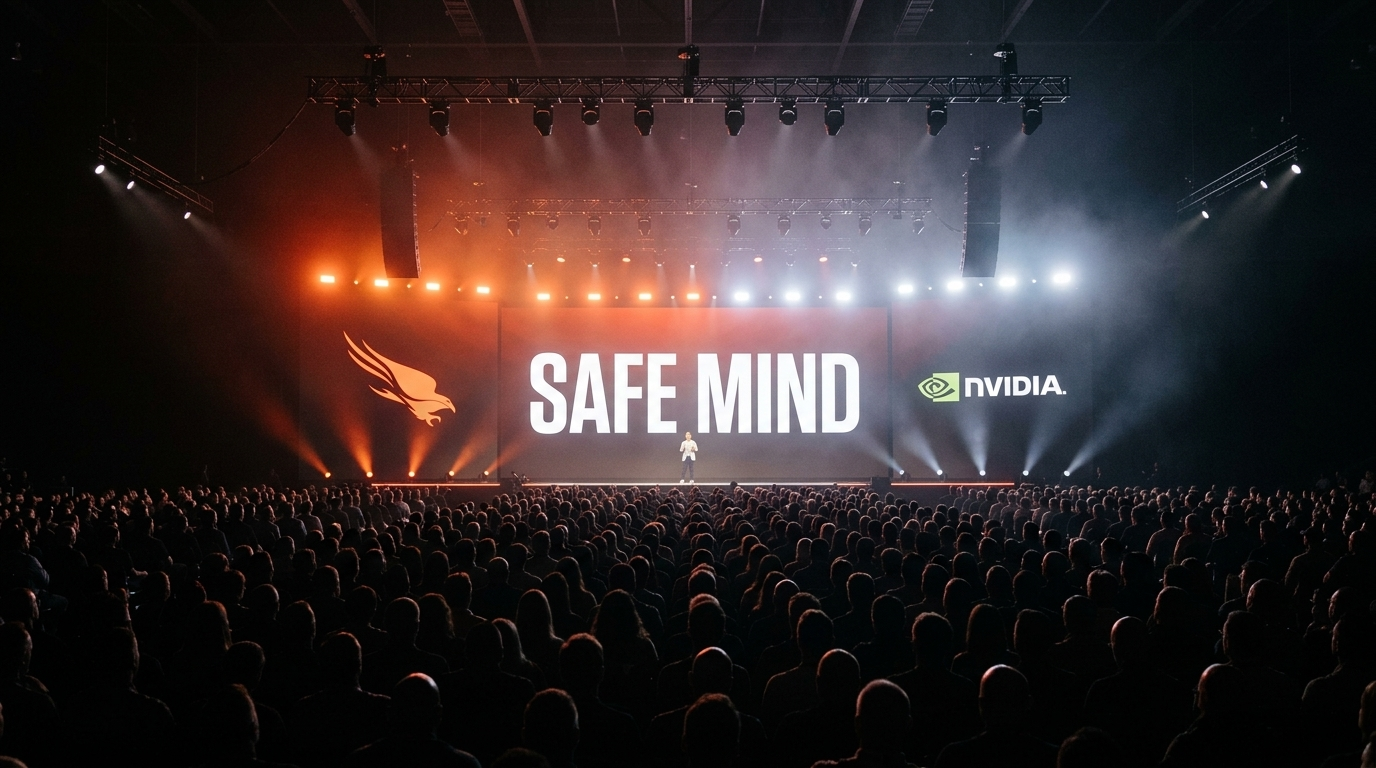
What interests us most in SafeMind is ultimately neither Red Tempest
nor Blue Solano taken separately.
It is the loop.
For years, cybersecurity tools mostly tried to get better at detection.
Then they got better at analysis.
Now the industry wants to make them able to act.
SafeMind represents that transition.
But we have to avoid a marketing trap: believing that autonomy automatically means security.
An AI that can act very quickly can also make a mistake very quickly.
The future of cybersecurity will probably not be:
“AI replaces security teams”
but rather:
“security teams become able to supervise dozens or hundreds of specialized agents.”
And there, the change becomes much deeper.
What this could change in the coming years
If this approach really works at scale, SOCs could evolve.
| Today | Tomorrow |
|---|---|
| Analyst → alert → investigation → decision → action | Agent → investigation → simulation → proposal → validation → action → control |
Then, potentially:
several specialized agents working together under human supervision.
👁️
🔎
🧪
✅
📝
👤
The Global Zone verdict
SafeMind is one of the most interesting cybersecurity announcements of this week,
not because an AI would suddenly be able to “beat the hackers”, but because it shows
a move toward defense systems that can test, learn, and act in a continuous loop.
The Nvidia + CrowdStrike pairing is strategic too.
Nvidia brings the Nemotron models and the compute.
CrowdStrike brings the data, the security expertise, and the Falcon platform.
The result is an attempt to build a
specialized cybersecurity AI rather than a simple general-purpose chatbot.
Several things still have to be checked: independent performance, real cost, error rate,
governance, integration into complex environments, and the ability to work against attackers
who are using AI themselves.
For Moroccan companies, the message is already clear:
cybersecurity is not only going to become more automated.
It is going to become more intelligent, continuous, and agentic.
And for a company that depends a little more on digital tools every day, waiting until this shift
is finished before paying attention could be the wrong strategy.
❓ FAQ — SafeMind, Nvidia, and CrowdStrike
What is CrowdStrike SafeMind?
SafeMind is an agentic cybersecurity system developed by
CrowdStrike with Nvidia. It brings together the Red Tempest
and Blue Solano models with orchestration layers that can run
security workflows.
What is Red Tempest for?
Red Tempest is the offense-oriented model. CrowdStrike presents
it as a system able to emulate adversaries and look for
attack scenarios in controlled environments.
What is Blue Solano for?
Blue Solano is the defensive model. It is meant to identify
weaknesses and to generate or apply protective measures within
SafeMind.
What is Nvidia’s role?
Nvidia supplies the Nemotron models used as the base, along
with the accelerated computing infrastructure, and works with CrowdStrike
as an AI design partner.
Can SafeMind replace a cybersecurity expert?
No. It is designed to automate and speed up certain operations,
but companies must keep governance, controls,
and suitable human supervision.
Are the +29% and 6× figures independent?
No. They match the evaluations announced by CrowdStrike.
They should therefore be treated as results claimed by
the company until independent evaluations can
confirm them.
Is SafeMind available to every company?
CrowdStrike announces native integration into Falcon and also
plans access to some models and components through Project
QuiltWorks. The exact terms of access depend on the offer and
the program involved.
Why does SafeMind matter for Morocco?
Because Moroccan companies are digitizing quickly and
must protect more data, cloud applications, workstations,
and infrastructure. Automating some cybersecurity
operations could be especially useful for
organizations whose security teams are limited.
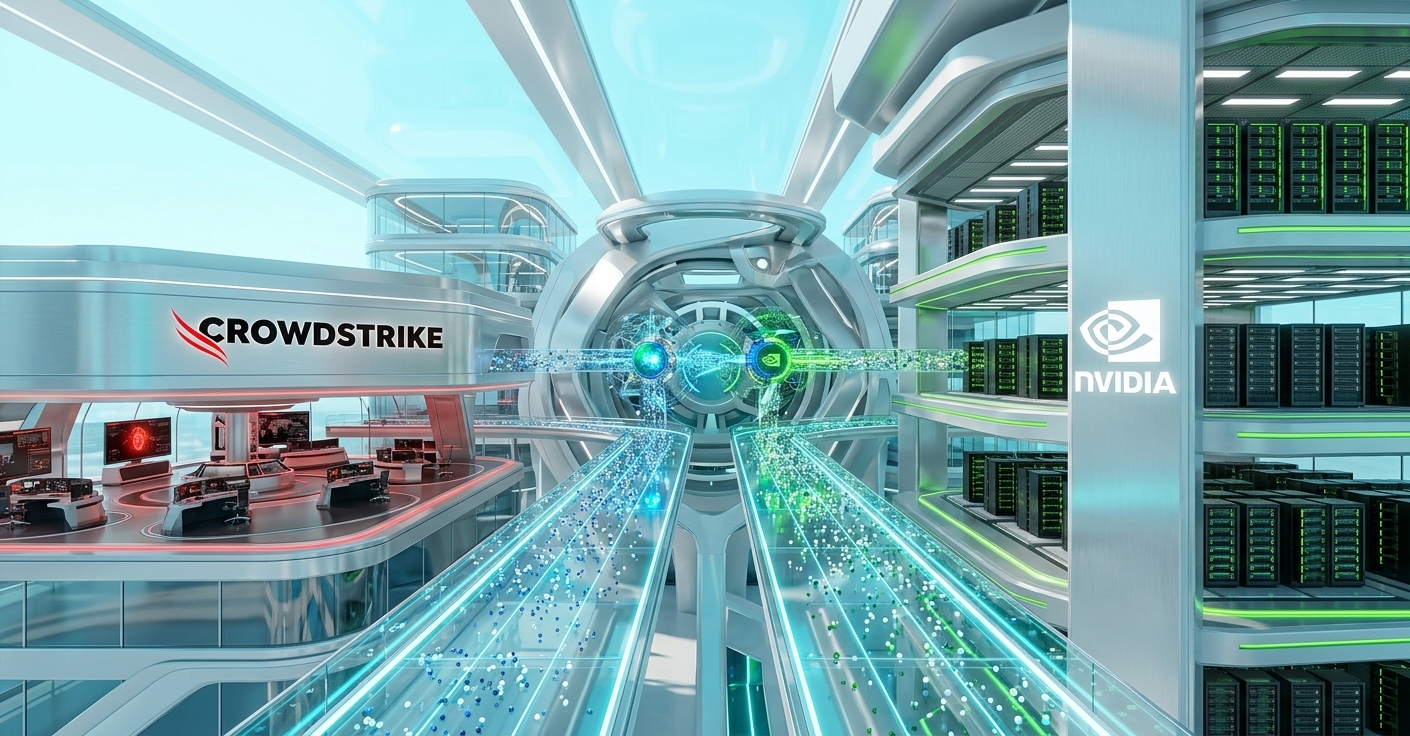
Global Zone — The useful reading of SafeMind is what changes for a buyer in Morocco, not the slogan.
Avis des lecteurs
Votre avis compte
Partagez votre expérience et aidez d’autres lecteurs à mieux comprendre ce sujet.
Soyez le premier à donner votre avis.

