

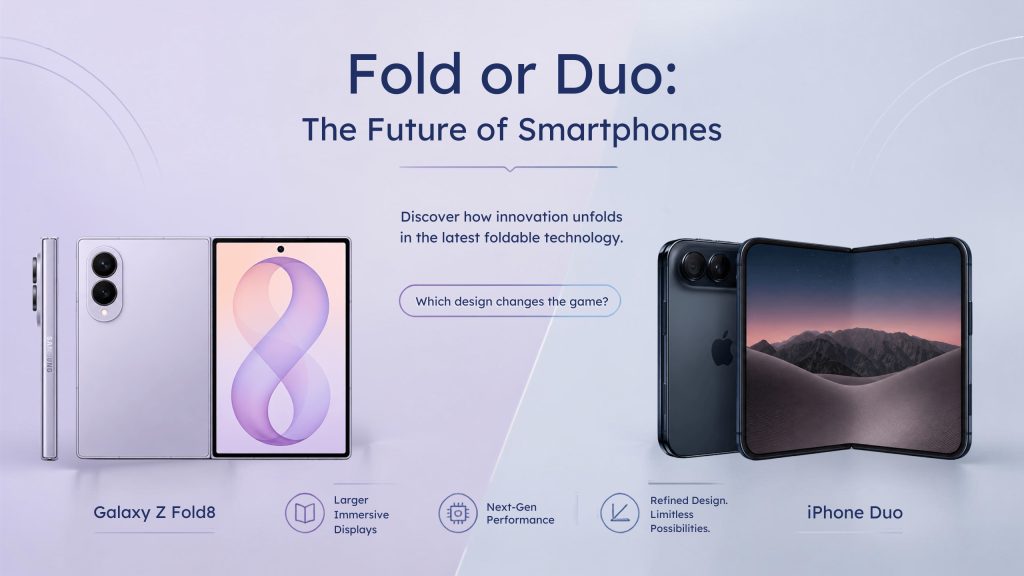
iPhone Duo vs Galaxy Z Fold8: What Is Different in Daily Use?
Listen to this article
Read aloud by your browser. No audio file is downloaded.
Spoken by your browser. This is not a recorded audio file. The time shown is an estimate.
If you are deciding now, keep iPhone Duo in view before the price or the spec sheet.
The iPhone Duo and the Samsung Galaxy Z Fold8 both use a book-style foldable phone format, with a large 7.6-inch inner screen. Their day-to-day experience, though, rests on two different approaches.
Beyond the specifications, the real question is how each one fits real use: reading documents, multitasking, photos, video, mobility, software, and ecosystem.
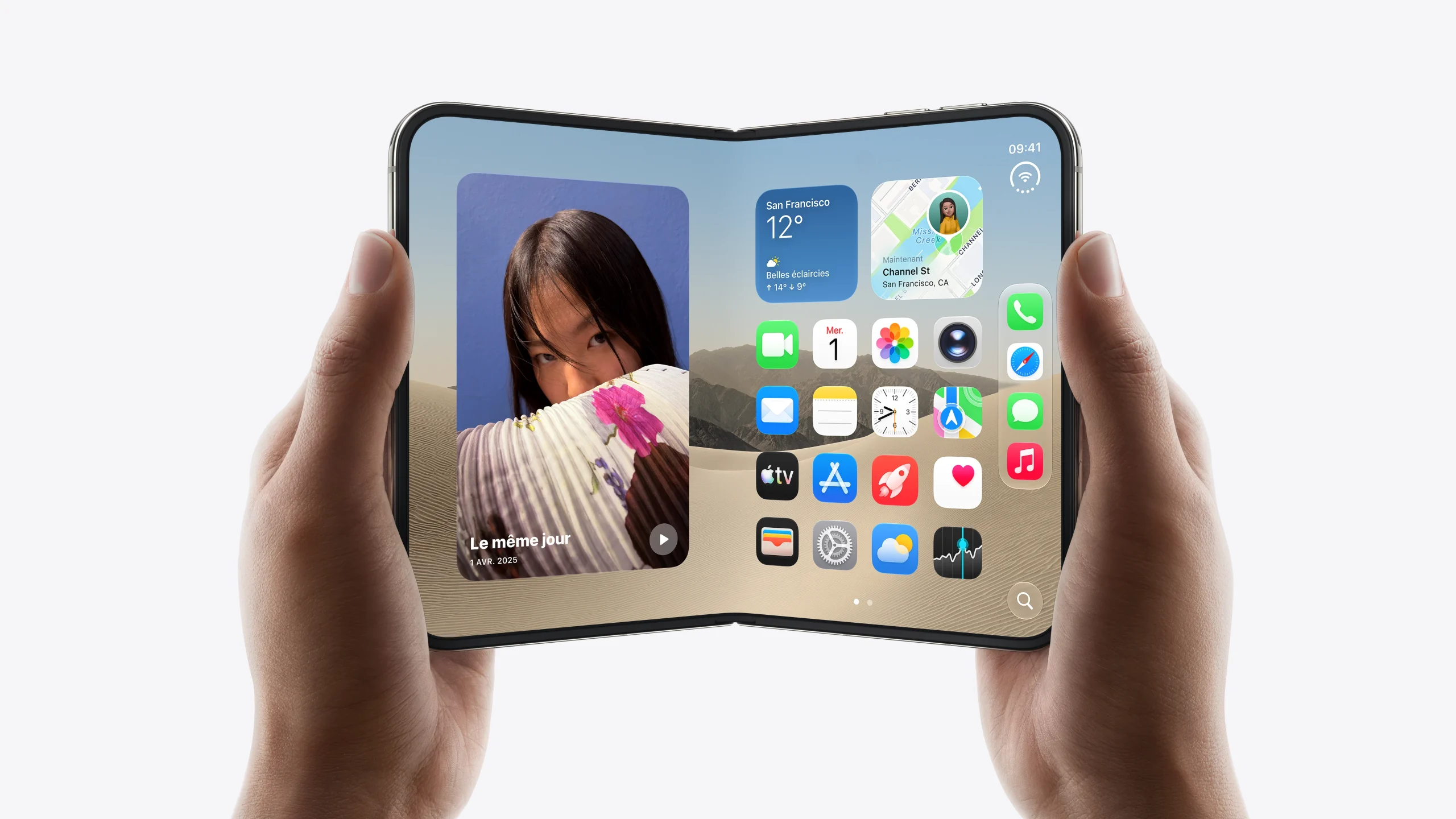
Two foldables that look close, but differ in philosophy
Apple enters the foldable-phone market in 2026 with the iPhone Duo. Closed, it stays close to an iPhone experience, then offers a 7.6-inch inner screen when it is open.
The Galaxy Z Fold8 continues an approach Samsung has developed over several generations of Fold phones, with particular attention to multitasking and to using the large screen under Android.
iPhone Duo
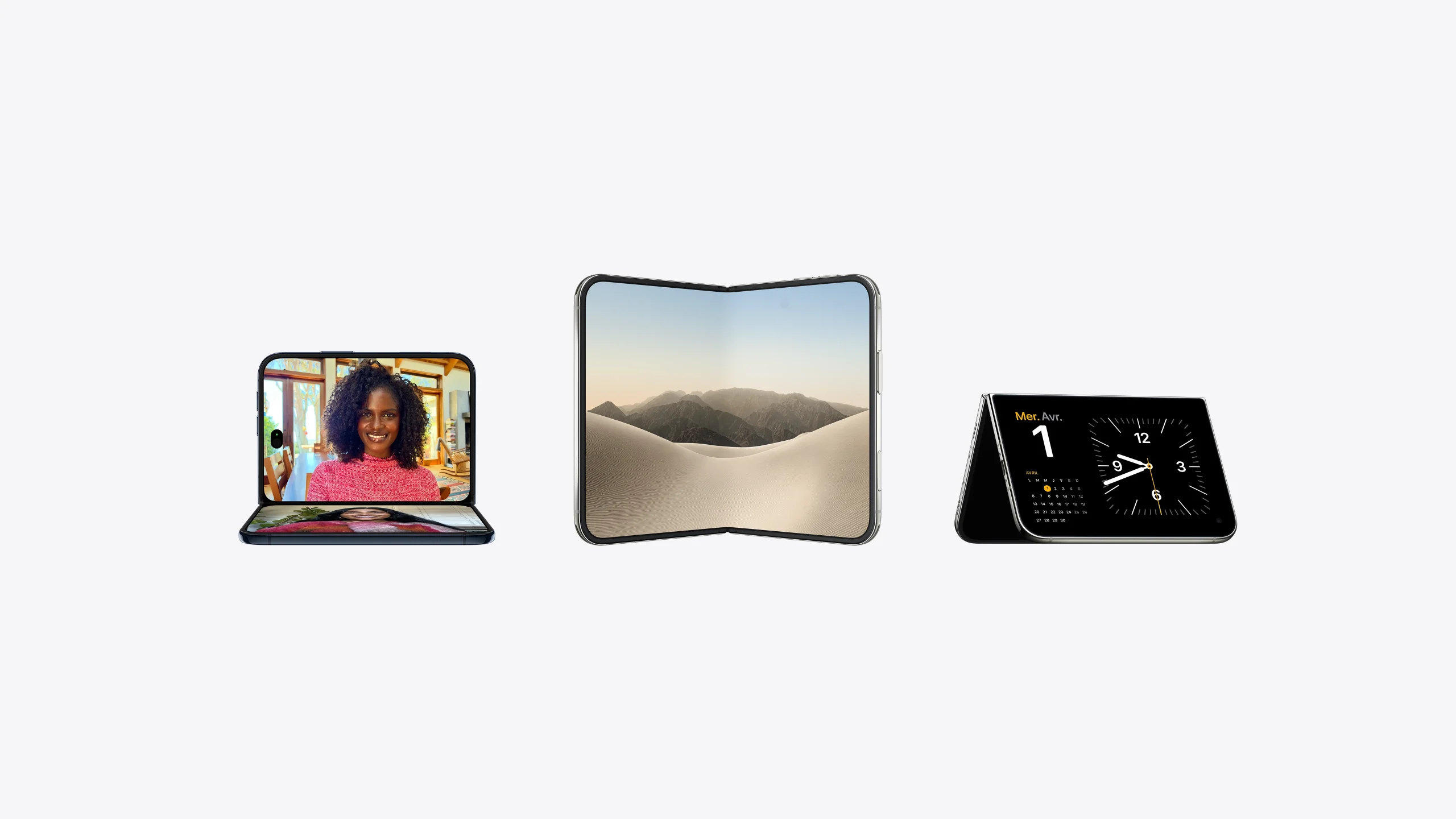
The iPhone Duo has a 5.4-inch outer screen and a 7.6-inch inner screen. Apple aims for continuity between the two formats with tight integration of iOS 27.
The aim is to keep a familiar experience when the phone is closed, while offering more space when it is unfolded.
Galaxy Z Fold8
The Galaxy Z Fold8 has a 5.5-inch outer screen and a 7.6-inch inner screen. Samsung draws on several Fold generations to offer a device built around the large screen and multitasking.
App windows, apps side by side, and productivity uses are an important part of the Fold experience.
The screen: size matters, but use matters more
Both phones offer a 7.6-inch inner screen. The difference is therefore not only the diagonal. It is mainly how each manufacturer uses that extra surface.
Once open, the phone can become a real space for reading. Documents are more comfortable to read, spreadsheets have more room, and some apps can be used side by side.
On the iPhone Duo, Apple highlights a nano-textured finish meant to reduce reflections and make the crease less visible.
Samsung, for its part, uses an anti-reflective treatment on the Galaxy Z Fold8 to improve screen readability in different conditions.
Design and how it feels in the hand
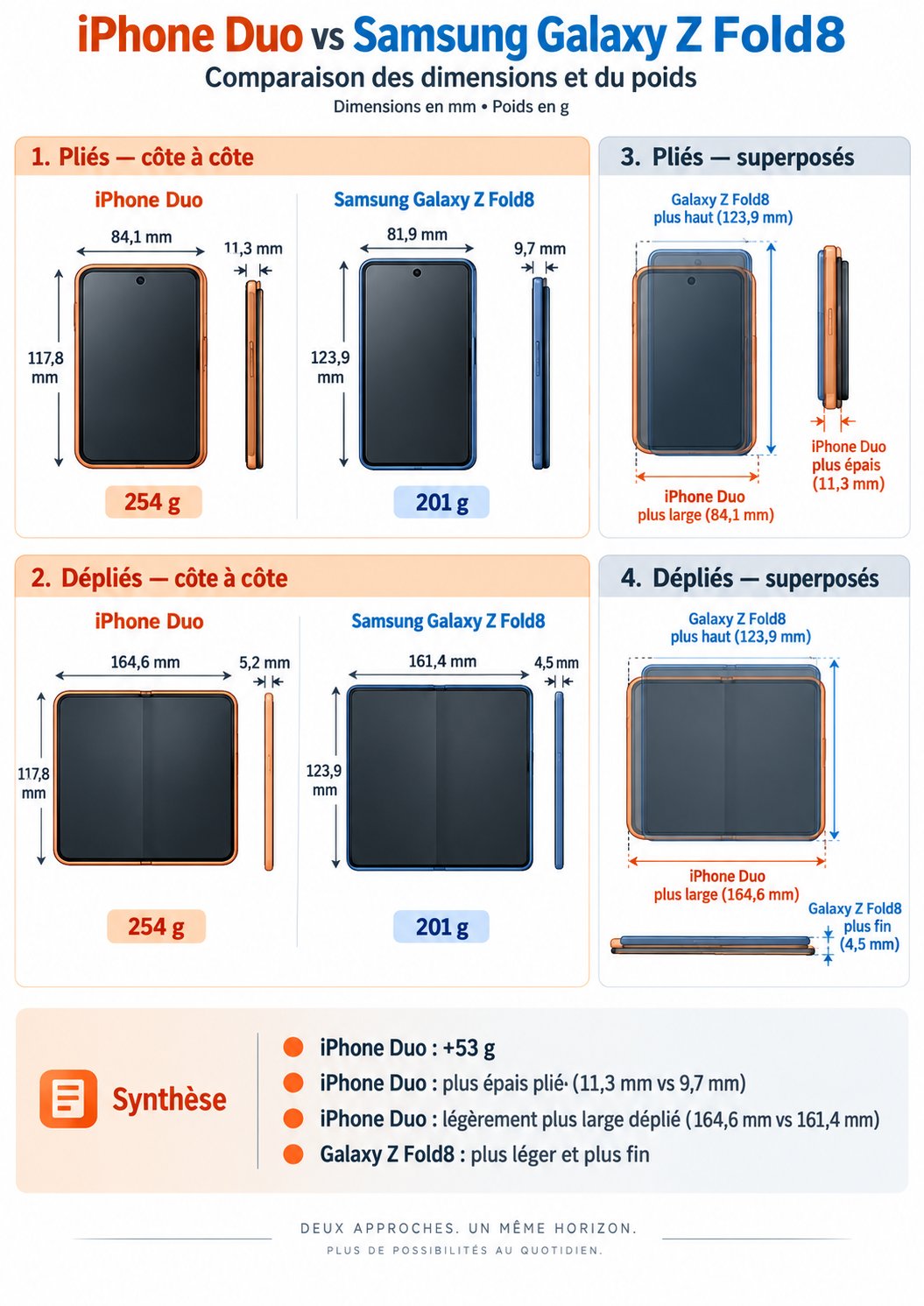
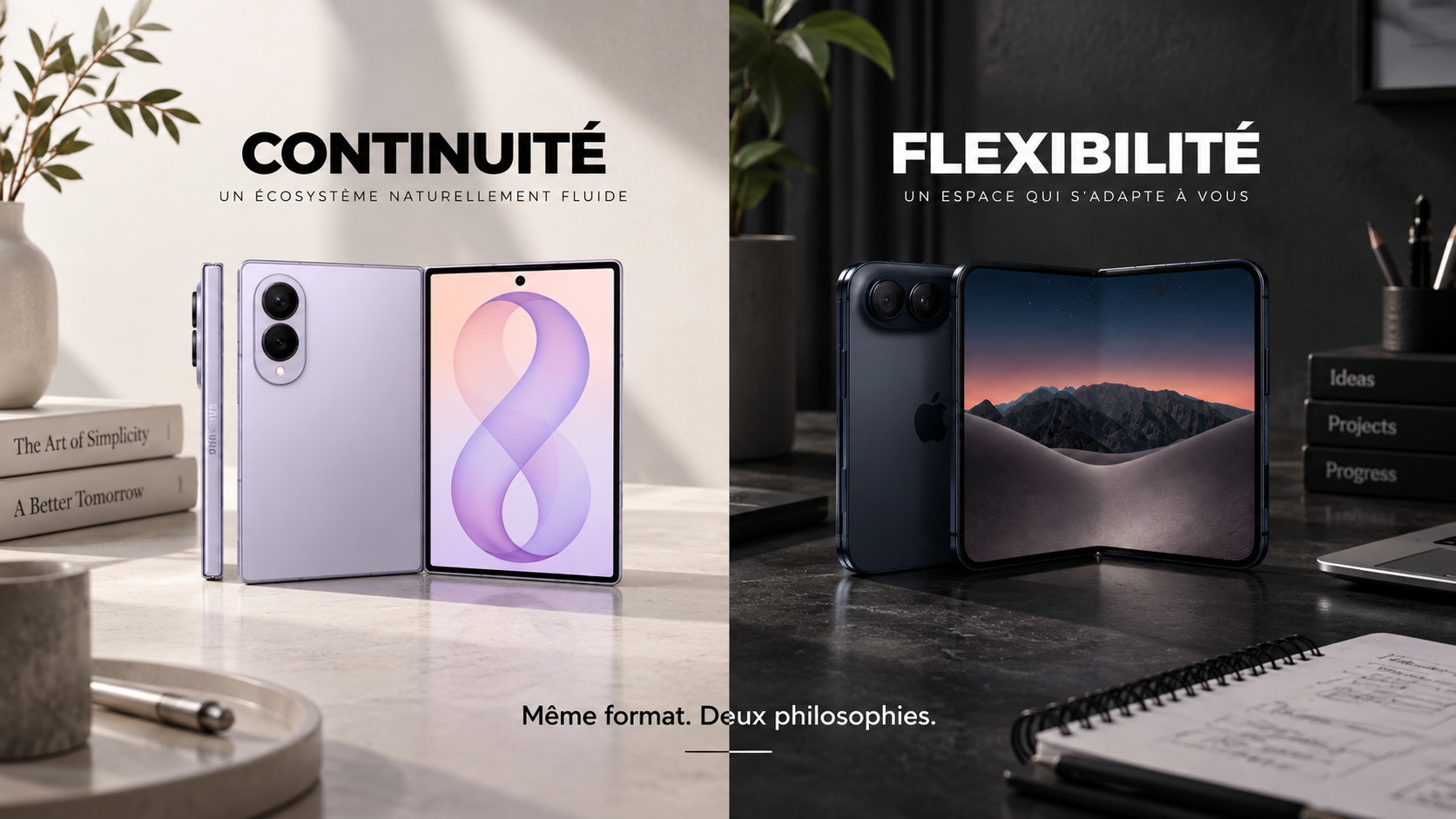
The foldable format imposes a particular compromise: the device has to stay practical when closed while offering a much larger surface when open.
The iPhone Duo uses a titanium construction and a compact format when closed, with an approach that tries to keep the familiar points of reference of an iPhone.
The Galaxy Z Fold8 keeps the logic of a phone that can become a kind of mini tablet when unfolded.
Software: the real battleground
On a foldable phone, software plays a role as important as the hardware. The large screen has to be genuinely used if it is to change daily habits.
iOS 27 on the iPhone Duo
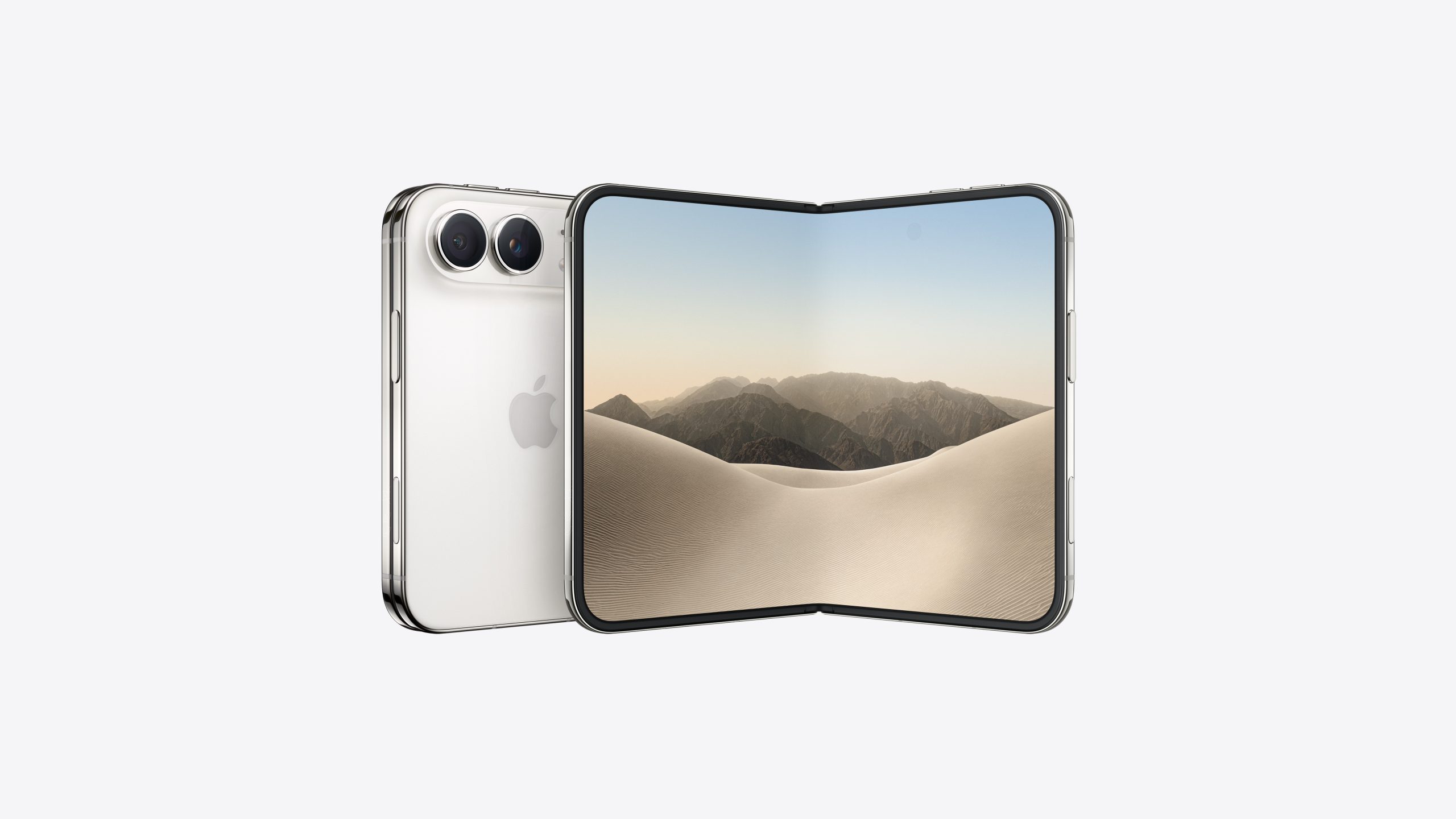
Apple adapts iOS 27 to the Duo’s format so the move from the outer screen to the inner screen stays coherent.
The approach rests mainly on continuity of the experience and on integration between the hardware and the system.
Android on the Galaxy Z Fold8
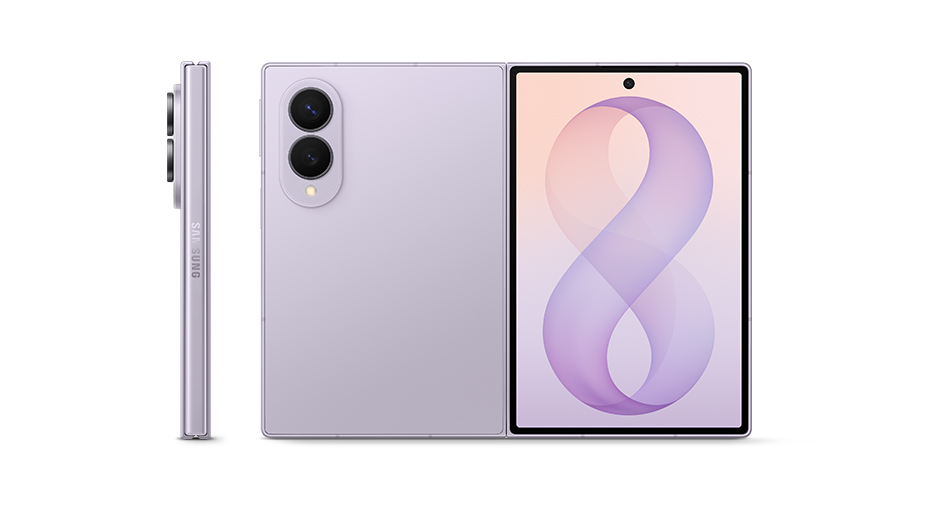
Samsung benefits from several generations of Fold phones to develop an experience centered on multitasking.
App windows, apps side by side, and productivity uses are part of this range’s identity.
Photo and video: two premium approaches
Galaxy Z Fold8:

the iPhone Duo:

The foldable format adds another dimension to photography and video. The device can, in particular, be used in different positions when it is partly open.
The iPhone Duo has a dual 48 MP camera system and uses its foldable format to offer new ways of shooting.
The Galaxy Z Fold8 takes a complete, versatile photographic approach. In both cases, the real value depends more on how you take pictures than on the megapixel count alone.
Battery life and intensive use
The large screens of foldable phones can use more energy, while their internal architecture has to fit several components into a limited space.
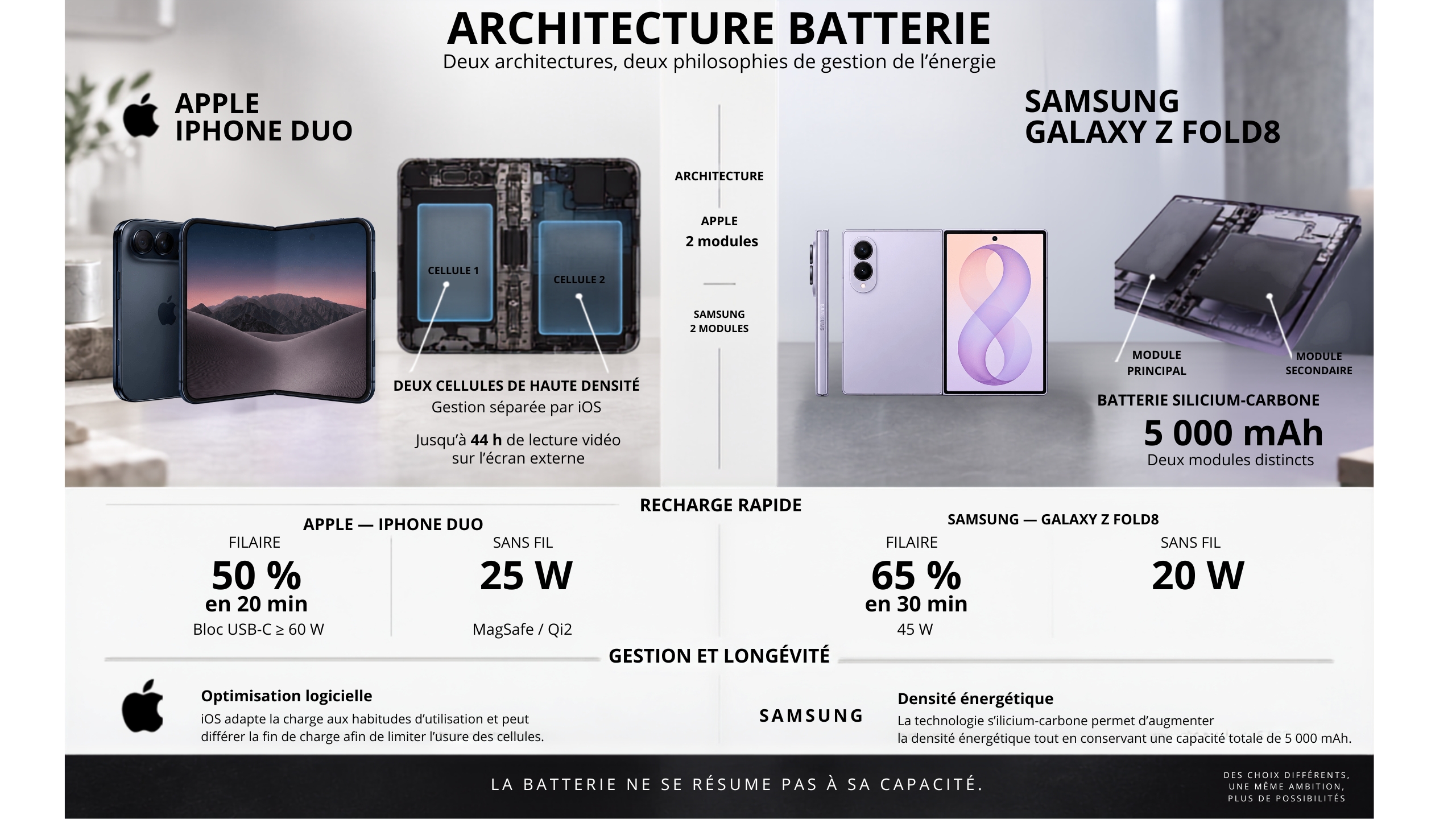
Apple uses a dual-battery architecture and a vapor-chamber cooling system on the iPhone Duo.
Samsung, for its part, bets on optimization between hardware and software.
Figures published by the manufacturers still have to be read in the context of real use. Video, games, web browsing, photography, and multitasking can change battery life considerably.
The essential differences in daily use
| Element | iPhone Duo | Galaxy Z Fold8 |
|---|---|---|
| Outer screen | 5.4 inches | 5.5 inches |
| Inner screen | 7.6 inches | 7.6 inches |
| System | iOS 27 | Android |
| Multitasking | Adapted to the foldable format | An experience built around multitasking |
| Ecosystem | Apple | Android / Samsung |
| Stylus | Compatible with Apple Pencil USB-C | No S Pen support according to the launch information |
| Overall approach | Continuity between iPhone and large screen | Large screen and multitasking productivity |
Which device fits which user?

For people already in the Apple ecosystem
The iPhone Duo fits naturally into the Apple environment. For someone who already uses several Apple devices and services, ecosystem continuity is an important part of the experience.
For Android users and people who multitask
The Galaxy Z Fold8 fits the Android and Samsung environment and keeps the Fold approach built around multitasking, windows, and productivity.

For professionals and intensive users
For professional use, megapixels or screen size alone are not enough to set the two devices apart.
Productivity depends more on the software you use, your work habits, how apps are managed, and the ecosystem you are already used to.
For watching and reading content, screen quality and how apps use the inner surface can also shape the daily experience.
What you should actually keep in mind
The iPhone Duo and the Galaxy Z Fold8 answer the same general problem: offering a large screen without making you carry a tablet.
Their difference lies mainly in their approach to software, ecosystem, and use.
Apple bets on integration between the hardware and iOS 27, while Samsung builds on several generations of experience with the Fold format and on Android multitasking.
The choice therefore depends less on a simple specification comparison than on habits, ecosystem, and each person’s daily use.
Conclusion
The foldable-phone market is entering a phase where technology alone is no longer enough to set devices apart.
The screen, the software, the ecosystem, and how the phone fits into daily life become essential.
The iPhone Duo is Apple’s arrival in this category, with an approach centered on continuity of the iPhone experience. The Galaxy Z Fold8 continues a philosophy Samsung has developed over several generations around the large screen and multitasking.
Day to day, the difference is therefore mainly in how each device matches its user’s habits.
Common questions
Do the iPhone Duo and the Galaxy Z Fold8 have the same inner screen size?
Yes. Both phones have a 7.6-inch inner screen. The experience can still differ depending on the screen treatment and on how the software uses that surface.
Do both phones allow multitasking?
Yes. Both devices can be used for several tasks on their large screen. Samsung, though, has a particularly developed experience of multitasking on its Fold range.
Is the iPhone Duo compatible with the Apple Pencil USB-C?
Yes. This article states that the iPhone Duo is compatible with the Apple Pencil USB-C.
Does the Galaxy Z Fold8 support the S Pen?
According to the launch information used in this article, the Galaxy Z Fold8 does not support the S Pen.
Which phone fits the Apple ecosystem?
The iPhone Duo is designed to fit naturally into the Apple ecosystem, while the Galaxy Z Fold8 belongs to the Android and Samsung environment.
Which one is better suited to productivity?
It depends on how you work and which software you use. The Galaxy Z Fold8 puts particular emphasis on multitasking, while the iPhone Duo bets on iOS 27 integration and continuity of the Apple experience.
Apple — Warranty, stock and after-sales support matter as much as iPhone Duo itself.
Avis des lecteurs
Votre avis compte
Partagez votre expérience et aidez d’autres lecteurs à mieux comprendre ce sujet.
Soyez le premier à donner votre avis.

