

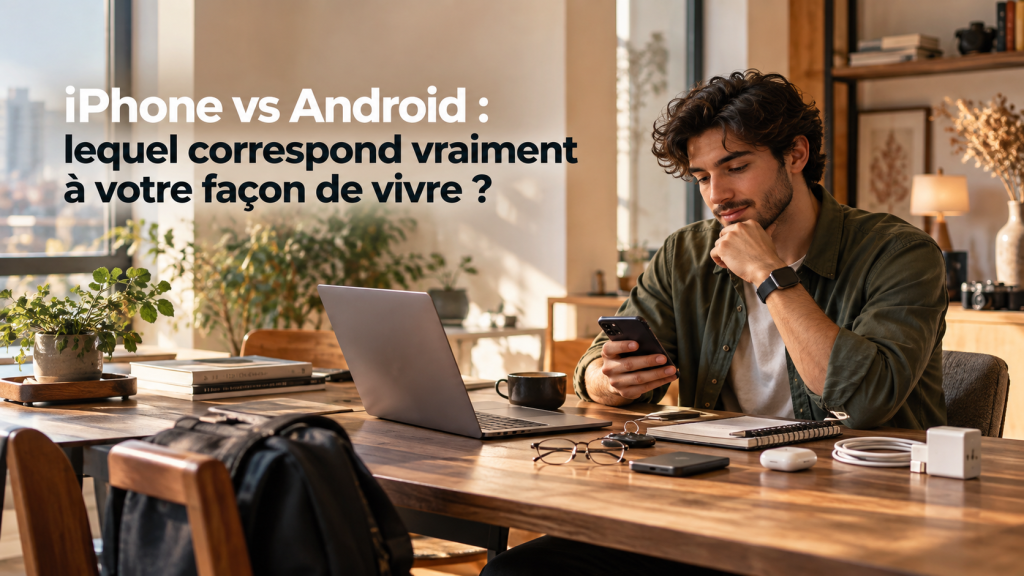
iPhone vs Android: which one really matches the way you live?
Listen to this article
Read aloud by your browser. No audio file is downloaded.
Spoken by your browser. This is not a recorded audio file. The time shown is an estimate.
If you are deciding now, keep iPhone vs Android in view before the price or the spec sheet.
A technical and practical comparison to understand the differences between iOS and Android before choosing your next smartphone.
Introduction
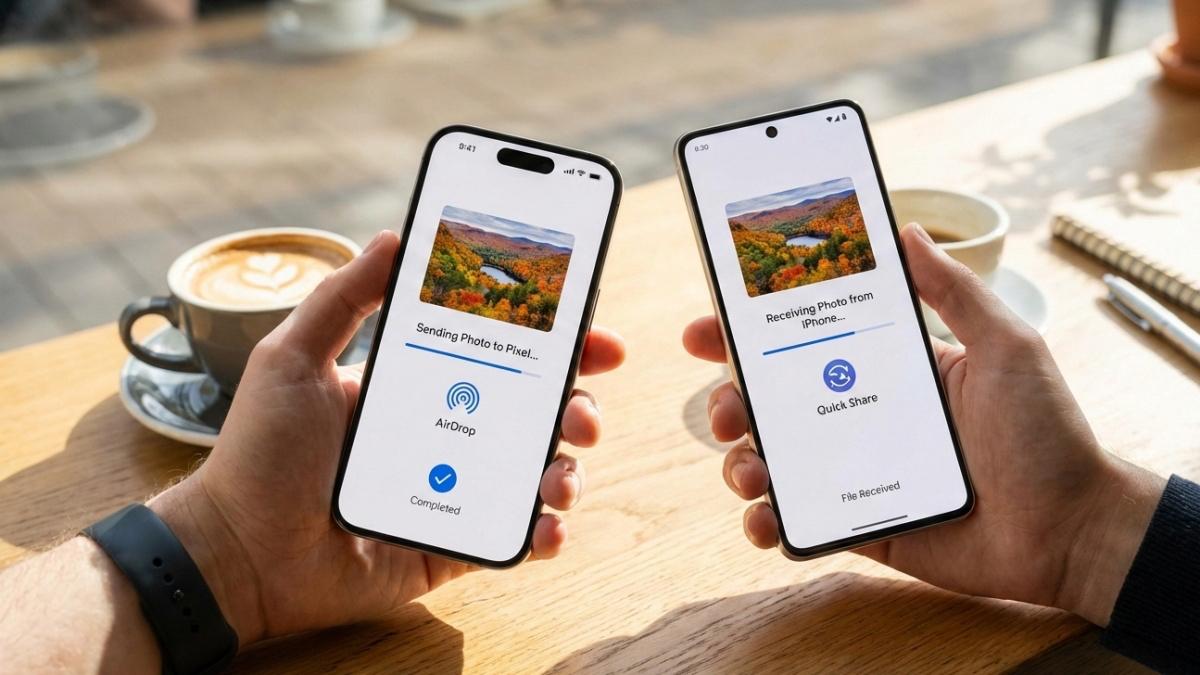
For years, the question seemed almost unavoidable: iPhone or Android ? We compared cameras, processors, RAM, screens, and prices. Then everyone went home to their own camp.
But in 2026, this way of comparing smartphones is becoming less and less useful.
An iPhone is no longer just an Apple phone. A Galaxy is no longer just a smartphone from Samsung. A Pixel, a Xiaomi, an HONOR, or a OnePlus do not merely offer another spec sheet.
Behind every device there is an ecosystem: your computer, your earbuds, your watch, your photos, your files, your apps, your cloud services, and your habits.
The real choice depends less on the logo than on how you actually use your technology.
Two different technology philosophies
Apple tightly controls the hardware and software of the iPhone : the Apple Silicon chip, the hardware, iOS, security, services, and integration with Mac, iPad, and Apple Watch.
Android works as a platform used by Samsung, Google, Xiaomi, OPPO, HONOR, OnePlus, vivo, Motorola, ASUS, Sony, and others. So there is not one single Android: a Galaxy’s Android is not exactly that of a Pixel or of a Xiaomi.
Freedom or integration?
Apple tries to make the whole experience coherent. Android tries harder to offer choice.
With Android, makers can change the interface, multitasking, shortcuts, AI features, file management, and personalization. That is not only a visual difference: it changes how you use the smartphone.

Processors: A-series versus Snapdragon, Tensor, MediaTek, and Exynos
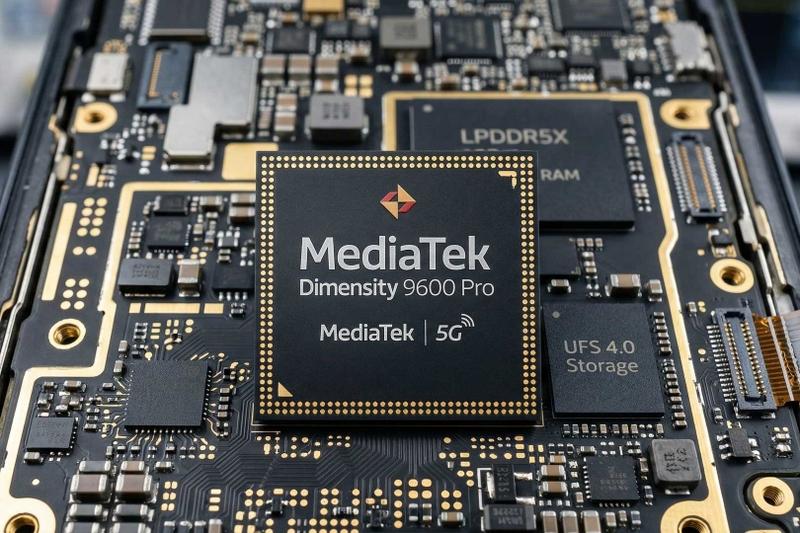
Apple designs its own A-series chips. Android uses Snapdragon, Dimensity, Tensor, and Exynos, among others.
A modern chip combines a CPU, a GPU, an AI accelerator, a modem, and memory controllers. You have to look at sustained performance, power use, temperature, the GPU, AI, and software optimization, not only the clock speed or a benchmark score.
For gaming and creation, sustained performance matters especially.
RAM: the numbers are not enough
Comparing only 12 GB of Android with X GB on iPhone is misleading. iOS and Android do not necessarily manage memory the same way.
You have to look at real behavior: how many apps stay open, reloads, games, video editing, and AI processing.

Screens: OLED, LTPO, and refresh rate
Two OLED screens can be very different. Look at resolution, brightness, refresh rate, LTPO, HDR, calibration, and touch response.
A 120 Hz screen can refresh its image twice as often as a 60 Hz screen. LTPO lets the rate change dynamically, so you get smoothness and lower power use together.

Photo and video: compare the model, not only the system
Saying ” iPhone vs Android for photos” means comparing one maker with an entire planet. A Galaxy Ultra, a Pixel, a Xiaomi flagship and an affordable Android do not have the same camera systems.
Compare sensors, size, aperture, stabilization, the telephoto, the ultra-wide, HDR processing, video, night processing, autofocus, RAW, codecs, and microphones.

Android : a hardware variety Apple does not offer
Android lets you choose among smartphones that are compact, with large screens, gaming phones, or models with a stylus, foldables, ultra-premium phones, affordable phones, fast charging, or a camera-first design.
Apple controls its lineup much more strictly. That makes the choice simpler, but it reduces variety.

The foldable changes the comparison
Android has long dominated smartphones foldables that everyday buyers use, notably the Galaxy Fold and Flip. The arrival of the iPhone Duo changes how the market is seen: the foldable also becomes a category inside Apple’s ecosystem.

Personalization and file management
Android generally offers more control over the home screen, widgets, launchers, icons, shortcuts, multitasking, and files. Apple has improved iOS a lot, but it keeps a more controlled approach.
On Android, file management looks more like a computer’s. The iPhone today is more flexible than before thanks to the Files app and USB-C, but it stays more closed off.

USB-C: same connector, different capabilities
Two USB-C phones do not necessarily offer the same transfer speed, the same video output, or the same abilities with an external SSD. The official spec sheet for the iPhone 17 lists USB-C, DisplayPort, and USB 2 up to 480 Mb/s.
The connector describes the shape, not every capability.
Charging and battery
Android covers a very wide range of charging power and technologies. The iPhone offers USB-C and MagSafe/Qi2 on compatible models. Capacity in mAh is not enough to compare battery life either: the processor, modem, screen, brightness, refresh rate, software, and temperature matter too.

AI: the new battleground
AI shows up in translation, search, summaries, photography, retouching, transcription, calls, and assistants. Apple is building Apple Intelligence into its platforms; Android combines Google’s abilities with the AI features each maker adds.
Some tasks can run on the device through the CPU, GPU, or NPU, and others in the cloud. The smartphone therefore becomes a hybrid system.

Security: two different architectures
Android today has several layers of protection, and Android 16 adds improvements against malicious apps, dangerous sites, and some scams. Apple uses a highly integrated architecture with Face ID, the Secure Enclave, encryption, sandboxing, and centralized updates.
The difference is mostly about how tightly the environment is controlled.

Updates
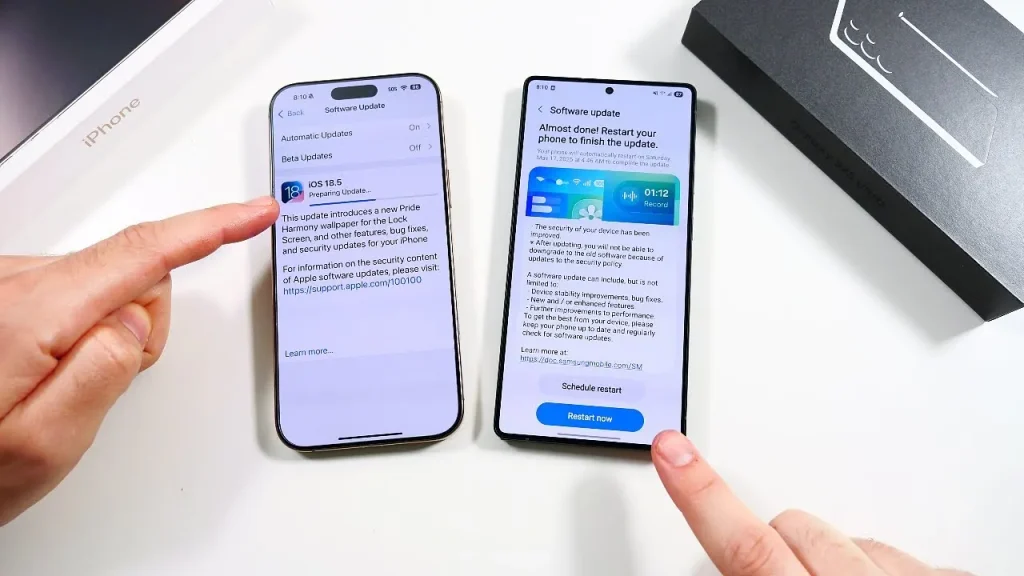
Apple directly controls the iPhone, the chip, and iOS, which makes update distribution simpler. Android involves more players: Google, the maker, the chipset, and sometimes the carrier and the region.
You therefore have to look at the update policy of the exact model, rather than judging Android as a whole.
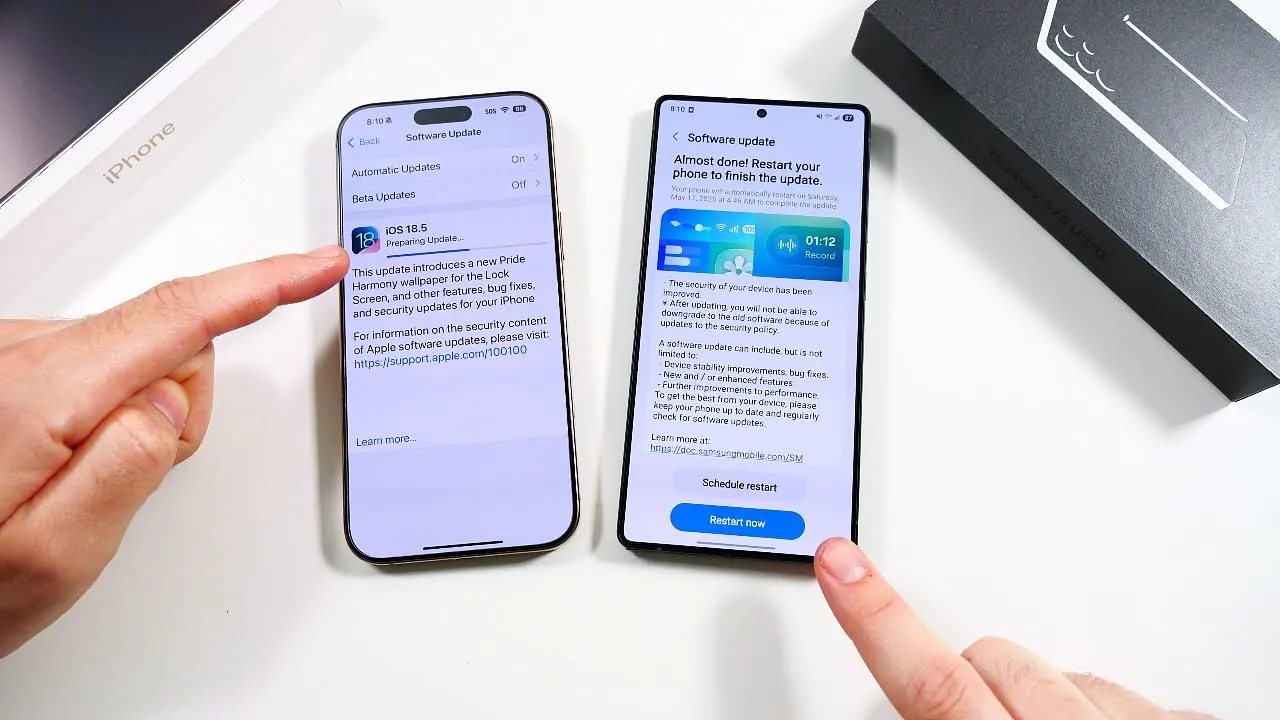
Quick Share versus AirDrop
The smartphone no longer lives alone

Which system fits your profile?
Studentbudget, battery life, storage, apps, and how long you keep the phone.
Professionalsecurity, files, computer, calls, sync, and support.
Creatorvideo, codecs, storage, USB, microphones, transfer to an SSD, and sustained performance.
GamerGPU, CPU, cooling, refresh rate, battery life, and games.
Enthusiastpersonalization, files, automations, foldables, styluses, and desktop modes.
The Moroccan market
In Morocco, Android has a large place, with offers from entry level to premium. The iPhone sits more in the premium segments.
You therefore have to look at the total cost of the ecosystem: phone, accessories, storage, watch, earbuds, computer, and cloud services.

The real trap: buying a phone instead of choosing an ecosystem
An exceptional camera is not enough if the phone makes your habits harder with your files, your earbuds, your watch, or your computer.
A smartphone should be judged inside your digital life.

Conclusion — your smartphone should adapt to you
An iPhone can be the best choice for one person. Android can be the best choice for someone else.
Apple bets on very controlled integration between hardware, software, and services. Android bets on a much wider variety of hardware, prices, makers, and possibilities.
Before you look at the logo, look at your computer, your earbuds, your watch, your apps, your files, the way you work, your games, and your budget.
The real choice between iPhone and Android starts there.
Comparison table — iPhone vs Android
| Criterion | iPhone / iOS | Android |
|---|---|---|
| Choice of models | More limited | Very wide |
| Price range | Mid-range / premium | Entry level to ultra-premium |
| Personalization | Good, but controlled | Very deep |
| Multitasking | More controlled | Very flexible, depending on the device |
| File management | More controlled | More open |
| Processors | Apple Silicon | Snapdragon, MediaTek, Tensor, Exynos… |
| Screens | OLED / ProMotion depending on the model | OLED/AMOLED/LTPO, widely varied |
| Charging | USB-C + wireless, depending on the model | USB-C + many fast-charging options |
| Camera | Tight hardware and software integration | Very wide variety |
| AI | Apple Intelligence | Google + the maker’s AI |
| Security | Highly integrated architecture | A robust and varied architecture |
| Updates | Centralized by Apple | Depend more on the maker |
| Foldables | iPhone Duo | Many Android models |
| Ecosystem | Apple, highly integrated | Several ecosystems |
| Freedom of choice | More limited | Very high |
Frequently asked questions
What is the best choice between iPhone and Android?
An iPhone can be the best choice for one person, and Android can
be the best choice for another. The real choice depends on your
computer, your earbuds, your watch, your apps, your files,
the way you work, your games, and your budget.
What is the main difference between iPhone and Android?
Apple tightly controls the iPhone’s hardware and software,
while Android works as a platform used by many
makers. Apple therefore bets more on integration and consistency,
while Android offers more choice and variety.
Is Android really more customizable than the iPhone?
Android generally offers more control over the home screen,
widgets, launchers, icons, shortcuts, multitasking, and
files. Apple has improved iOS a lot, but it keeps a
more controlled approach.
Does more RAM mean an Android is more powerful than an iPhone?
No. Comparing only 12 GB of Android with a different amount of
RAM on iPhone can be misleading. iOS and Android do not
necessarily manage memory the same way. Look at real
behavior: apps that stay open, reloads, games, video
editing, and AI processing.
Which system is better for photo and video?
Compare the exact model rather than the system as a whole.
A Galaxy Ultra, a Pixel, a flagship Xiaomi, and an affordable Android
do not have the same camera systems. Look at the sensors,
stabilization, the telephoto, the ultra-wide, HDR, video,
night processing, autofocus, RAW, codecs, and microphones.
Which system offers the most choice of smartphones?
Android offers much more hardware variety. It lets you
choose among compact smartphones, large screens, gaming phones,
models with a stylus, foldables, ultra-premium phones, affordable phones, fast charging,
or a camera-first design. Apple controls its lineup much more strictly.
Which system should you choose for gaming?
For gaming, look above all at the GPU, the CPU, cooling,
the refresh rate, battery life, and the games. Sustained performance
matters especially, particularly when the smartphone has to
hold its performance through long sessions.
Which system should a content creator choose?
For a creator, look in particular at video, codecs,
storage, USB, microphones, transfer to an SSD, and sustained
performance. The choice depends more on the kind of creation than on the logo
on the smartphone.
Which system is more interesting for a professional?
The choice depends mainly on how you work. Consider
security, files, the computer you use, calls,
sync, and support. The ecosystem you already use can
matter as much as the smartphone’s specs.
Is Android better for file management?
Android generally offers more control over files and how
they are organized. File management looks more like a
computer’s. The modern iPhone is more flexible than before thanks to Files
and USB-C, but it stays more closed off.
Do all USB-C smartphones offer the same capabilities?
No. Two USB-C phones do not necessarily offer the same
transfer speed, the same video output, or the same abilities with an
external SSD. The connector describes the shape, not every capability.
Which system offers the best battery life?
Battery life cannot be judged from the
mAh capacity alone. The processor, modem, screen, brightness,
refresh rate, software, and temperature also play an important role.
iPhone or Android: which is better for artificial intelligence?
Both platforms now build AI in deeply. Apple is developing
Apple Intelligence across its platforms, while Android combines
Google’s abilities with the AI features each maker adds. Some
tasks can run directly on the device through the CPU, GPU, or
NPU, while others use the cloud.
Are updates simpler on iPhone?
Apple directly controls the iPhone, its chip, and iOS, which simplifies
update distribution. Android involves more players,
notably Google, the maker, the chipset maker, and sometimes
the carrier and the region. Look at the update policy
of the exact model.
iPhone or Android: which should you choose if you already have a Mac?
The iPhone can be especially coherent if you already use an
Apple environment that includes a Mac, an Apple Watch, AirPods, an
iPad, or iCloud. Integration between those devices can then
simplify everyday use.
Is Android a better choice if you like changing hardware?
Android offers a much wider variety of makers,
formats, and features. You can choose among
compact smartphones, large screens, foldables, gaming phones, models
with a stylus, or camera-first devices.
Which smartphone should you choose in Morocco: iPhone or Android?
In Morocco, Android has a large place, with offers from
entry level to premium, while the iPhone sits more
in the premium segments. Look above all at the total cost of
the ecosystem: phone, accessories, storage, watch, earbuds,
computer, and cloud services.
Should you choose a smartphone based on its camera?
Not only that. An exceptional camera is not enough if the
phone makes your habits harder with your files, your earbuds,
your watch, or your computer. A smartphone should be judged inside
your digital life.
Should you choose iPhone or Android only by performance?
No. Performance matters, but the choice should also
take in the ecosystem, apps, files,
accessories, personalization, updates, the battery,
work habits, and budget.
What is the real criterion for choosing between iPhone and Android?
The real criterion is how you live with technology.
Before you look at the logo, look at your computer, your
earbuds, your watch, your apps, your files, the way
you work, your games, and your budget. The real choice between
iPhone and Android starts there.
Apple — Warranty, stock and after-sales support matter as much as iPhone vs Android itself.
A careful look at iPhone vs Android avoids paying for a feature you will not use.
Global Zone customers usually ask about iPhone vs Android when they compare two close options.
Treat iPhone vs Android as one criterion next to battery life, noise, weight and updates.
Nothing in iPhone vs Android replaces checking the exact model number on the box.
For a shop in Morocco, iPhone vs Android should be read together with local availability.
If you are deciding now, keep iPhone vs Android in view before the price or the spec sheet.
The useful reading of iPhone vs Android is what changes for a buyer in Morocco, not the slogan.
Warranty, stock and after-sales support matter as much as iPhone vs Android itself.
Avis des lecteurs
Votre avis compte
Partagez votre expérience et aidez d’autres lecteurs à mieux comprendre ce sujet.
Soyez le premier à donner votre avis.

